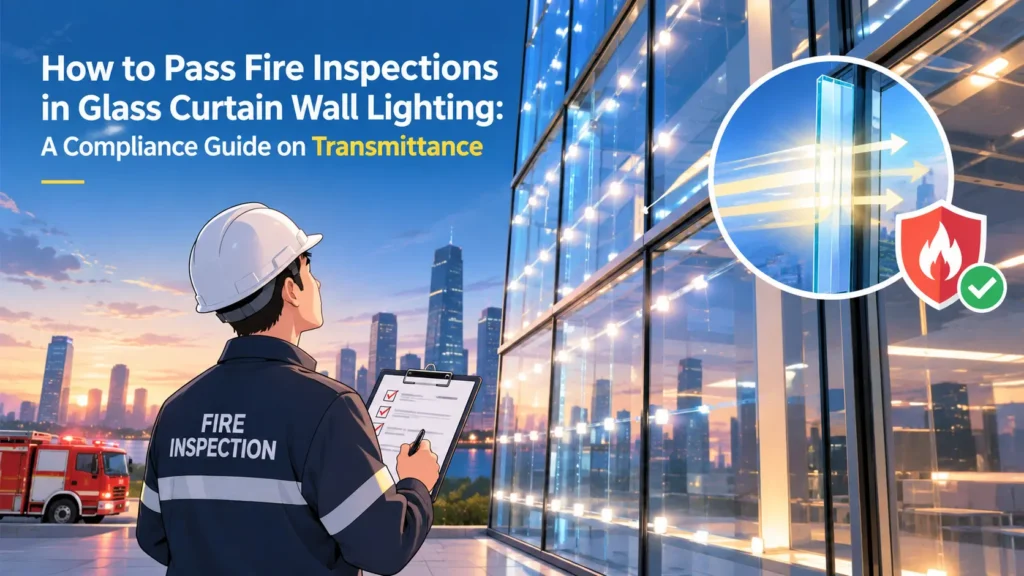
I. Three Major Pain Points and Compliance Dilemmas of Traditional Curtain Wall Lighting
Traditional lighting methods (such as densely packed LED strip lights, exposed pixel lights, or full-coverage LED displays) frequently violate regulatory redlines in modern architecture across three key dimensions:
Impaired Natural Lighting & Increased Energy Consumption: Traditional solid LED screens or cabinets act like “black patches” on the curtain wall, severely blocking indoor natural lighting. According to green building energy standards, this violates thermal performance and visible light transmittance requirements, forcing reliance on artificial indoor lighting.
Obstructed Fire Rescue & Smoke Exhaust: According to fire safety codes (e.g., GB 50016), building exteriors must reserve designated fire rescue windows and natural smoke exhaust vents. Heavy traditional lighting structures block these critical areas, hindering firefighter rescue operations and smoke ventilation during emergencies.
Structural Overload & Light Pollution: Traditional heavy displays create massive wind resistance and dead loads, posing safety risks to curtain wall mullions and structural glass connectors. Furthermore, unmanaged nighttime illumination easily causes glare, triggering environmental complaints and regulatory violations.
II. The Core Solution: Why LED Mesh Screens & Transparent Screens Are the Best Choice?
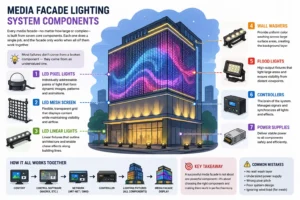
To break through traditional compliance bottlenecks, LED mesh screens and transparent LED screens have become the preferred technical choices for glass curtain wall illumination due to their unique physical structures:
Ultra-High Transmittance & Visual Invisibility: Featuring strip-like or grid-like hollow designs, their light transmittance ranges from 50% to 90%. When turned off during the day, they blend seamlessly into the glass curtain wall, maximizing natural daylight and indoor visibility.
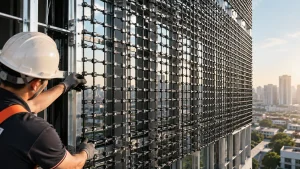
Perfect Fire Safety Compatibility: Modular assembly and high transparency allow design teams to precisely avoid fire rescue windows and smoke vents during secondary detailing, ensuring emergency access remains unblocked.
Lightweight & Electrical Flame Retardancy: Screen weights typically range from just 3 to 15 kg/m², and the hollow ratio significantly reduces wind load coefficients. Premium units utilize high-grade V-0 flame-retardant materials and low-voltage DC power supplies to eliminate electrical fire risks at the source.
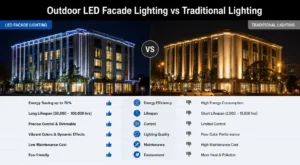
III. Solution Comparison: Traditional Lighting vs. Modern Compliant Mesh/Transparent Screens
The following table provides a comprehensive comparison to clearly highlight the differences:
IV. Engineering Practice: Core Compliance Standards & Design Details
During project execution and shop drawing detailing, engineering teams and contractors must strictly adhere to the following standards and guidelines:
Fire Safety & Smoke Exhaust Integration: Lighting equipment must never block fire rescue windows, smoke vents, or evacuation signs. Control systems must feature fire alarm integration interfaces to automatically cut power or switch to black/evacuation guidance screens during emergencies.
Green Building Daylighting Calculations: Following screen installation, overall visible light transmittance must be re-evaluated to ensure compliance with local green building evaluation standards for minimum envelope daylighting coefficients.
Light Pollution Control Standards: Strictly adhere to urban nightscape lighting design standards by utilizing smart control systems to automatically reduce brightness or power down during late-night hours, preventing glare interference with traffic and nearby residents.
“Zone Avoidance” Design Strategy: Implement a “zone-controlled, precision-avoidance” strategy—use ultra-high transparency transparent screens in fire rescue and core daylighting zones, and larger-pitch mesh screens in non-critical structural areas to achieve “unobstructed rescue and full transparency.”
V. Frequently Asked Questions (FAQ)
Q1: Do LED mesh screens affect the original waterproofing and wind pressure performance of glass curtain walls?
Answer: No. High-quality LED mesh screens and transparent screens typically utilize bracket-mounted or independent sub-frame structures optimized for mechanical integration with existing curtain wall mullions. Their hollow design relieves wind pressure (reducing wind load by over 50%) without compromising the original structural sealant and rain-screen waterproofing principles.
Q2: How should offices with high daytime daylighting requirements choose between transparent screens and mesh screens?
Answer: If an office building demands extremely high daytime indoor lighting and exterior transparency (such as a corporate headquarters), transparent LED screens (70%–90% transmittance) are recommended. For commercial complexes or large public buildings prioritizing stronger visual impact alongside ventilation and heat dissipation, LED mesh screens are more suitable.
Q3: What specific flame-retardant requirements do fire inspections impose on lighting equipment?
Answer: According to fire safety regulations, plastic components, cables, and PCB substrates used in curtain wall lighting must meet high-grade flame-retardancy standards (typically UL94 V-0 level), and power distribution boxes must include overload protection and fire-linked emergency power-cut features.
From commercial complexes and cultural tourism landmarks to large-scale LED Mesh Screen and Media Facade projects, MEKALEO remains dedicated to empowering global contractors and partners with reliable, transparent, and wind-conscious industrial-grade lighting and display solutions.
With 20 years of project expertise, we provide LED Mesh Screens, LED Point Lights, and Media Facade solutions designed for large-scale architectural applications. We look forward to joining hands with you to build the world’s next iconic lighting and media facade landmark.
* Metadata & Freshness: Published Date: October 5, 2026
Compliance References: GB 50016 (Code for Fire Protection Design of Buildings), JGJ/T 119 (Standard for Design of Urban Nightscape Lighting)