Professional Outdoor LED Mesh Screen Manufacturer for Commercial Building Facades
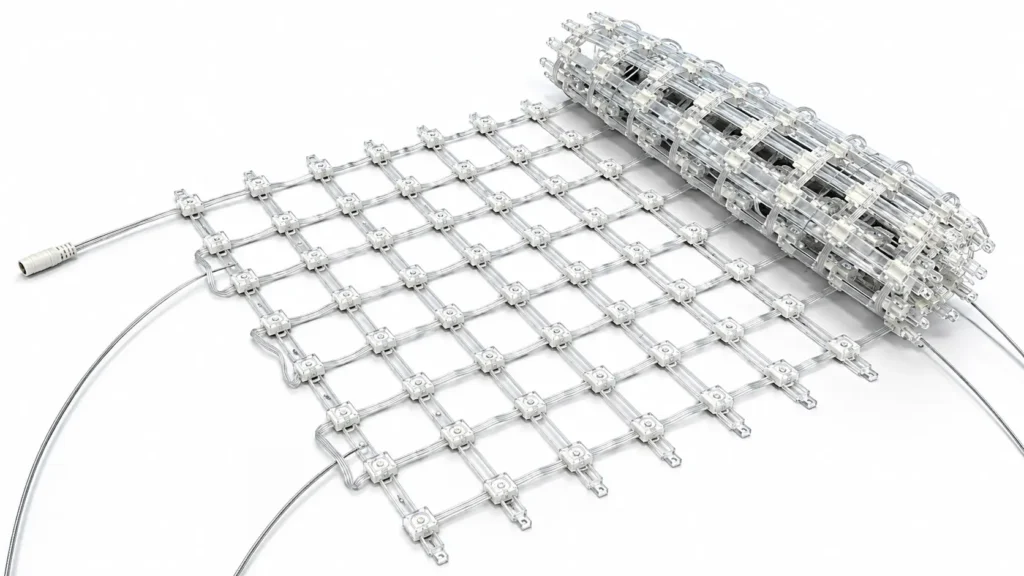
An LED mesh screen is a lightweight and transparent LED display system designed for building facades, commercial complexes, hotels, landmarks and architectural media applications.
Unlike traditional LED cabinets, LED mesh screens use an open mesh structure that allows natural light and airflow to pass through while creating dynamic digital lighting and video effects on building exteriors. This makes them an ideal solution for projects that require both architectural aesthetics and visual communication.
At MEKALEO, we manufacture outdoor LED mesh screens for distributors, wholesalers, lighting brands and facade lighting projects worldwide, with OEM and ODM customization available.
What Is an LED Mesh Screen?
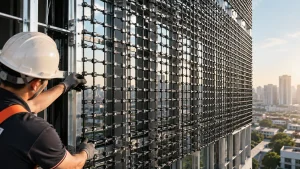
An LED mesh screen is an outdoor LED display made from lightweight LED strips or mesh modules arranged in an open-grid structure.
Instead of covering the entire facade with solid LED cabinets, the mesh design leaves spaces between LED pixels. As a result, the screen maintains a high level of transparency while reducing overall weight and wind resistance.
LED mesh screens are commonly used for:
- Commercial building facades
- Shopping malls
- Office buildings
- Hotels and resorts
- Landmark architecture
- Media facades
- Outdoor advertising displays
- Public architectural lighting projects
The biggest advantage of LED mesh technology is that it combines digital display performance with architectural integration.
When the screen is switched off, the building facade remains visually open and unobtrusive. When illuminated, it transforms into a dynamic media surface capable of displaying videos, animations, branding content and creative lighting effects.
LED Mesh Screen vs Traditional LED Display
Both products are designed for outdoor visual display, but they serve different architectural purposes.
| Feature | LED Mesh Screen | Traditional LED Display |
|---|---|---|
| Structure | Open mesh design | Solid cabinet structure |
| Transparency | High | No transparency |
| Weight | Lightweight | Heavy |
| Natural Light | Allows daylight through | Blocks daylight |
| Airflow | Excellent ventilation | Limited airflow |
| Wind Resistance | Lower wind load | Higher wind load |
| Architectural Appearance | Blends with facades | More noticeable |
| Ideal Application | Building facades & media architecture | Billboard & close-view displays |
Traditional LED displays are generally better for applications requiring extremely high resolution at close viewing distances.
LED mesh screens are better suited for large building facades, where viewing distances are longer and architectural transparency is important.
How Does an LED Mesh Screen Work?
An LED mesh facade consists of several key components working together to display dynamic visual content.
LED Pixels
Each mesh module contains RGB LED pixels mounted onto flexible or rigid PCB strips.
These pixels are responsible for producing color, brightness and video images across the building facade.
Different projects use different pixel pitches depending on viewing distance and design requirements.
LED Mesh Modules
The screen is built from modular panels that can be assembled into almost any size or facade shape.
This modular structure makes it suitable for:
- Large flat facades
- Curved architectural surfaces
- Irregular building geometry
- Custom media facade projects
Control System
The control system receives video content from the media server and sends display signals to the LED modules.
Depending on project requirements, the system may support:
- Standard video playback
- Synchronized facade lighting
- Remote content management
- Scheduled playback
- Architectural lighting integration
- DMX or Ethernet-based control systems
Power Distribution
Outdoor LED mesh systems use distributed power supplies installed according to the building layout.
The electrical design is customized based on:
- Screen size
- Pixel quantity
- Brightness
- Building voltage
- Installation structure
- Local electrical standards
Proper electrical planning is an important part of any facade project.
Why Choose an LED Mesh Screen for Building Facades?
LED mesh screens are specifically developed for architectural applications rather than conventional advertising displays.
Lightweight Structure
Compared with traditional LED cabinet systems, LED mesh screens significantly reduce the overall facade load.
This makes them suitable for many commercial buildings where structural weight is an important engineering consideration.
A lightweight design can also simplify transportation, installation and maintenance during facade construction.
Transparent Architectural Design
One of the defining characteristics of LED mesh technology is its open structure.
The transparency allows:
- Natural daylight to enter the building
- Interior occupants to maintain outward visibility
- Better integration with glass curtain walls
- Reduced visual obstruction when the screen is switched off
For architects and developers, this creates a better balance between digital media and building appearance.
Reduced Wind Load
The open mesh structure allows air to pass through the screen instead of creating a large solid surface.
This design helps reduce wind pressure compared with solid LED cabinet installations and is especially valuable for high-rise buildings and outdoor facade projects.
Actual structural performance should always be evaluated according to local engineering requirements.
Flexible Custom Design
LED mesh screens can be customized according to project needs, including:
- Screen dimensions
- Pixel pitch
- Brightness
- Transparency
- Module size
- Mounting structure
- Control system
- Color and housing design
This flexibility makes LED mesh suitable for both new construction and facade renovation projects.
LED Mesh Screen Pixel Pitch Guide
Pixel pitch is one of the most important factors when selecting an LED mesh screen.
It determines the distance between LED pixels and directly influences image detail, transparency and suitable viewing distance.
Common Pixel Pitch Options
| Pixel Pitch | Typical Application |
| P15 | Commercial facades and medium viewing distance |
| P31 | High-rise buildings and media facades |
| P37 | Landmark architecture and decorative displays |
| P55 | Large-scale outdoor facades |
| P80 | Long-distance architectural media applications |
A smaller pixel pitch generally provides finer image detail.
A larger pixel pitch usually provides:
- Higher transparency
- Lower pixel density
- Better performance for long viewing distances
- More economical solutions for very large facades
The correct selection should always be based on the actual project rather than simply choosing the smallest available pitch.
How to Choose the Right LED Mesh Screen
When planning a media facade project, several engineering and visual factors should be evaluated together.
Viewing Distance
The first consideration is where people will view the building.
For example:
- Pedestrian commercial streets require finer pixel pitch.
- Large plazas and wide roads can use larger pixel pitch.
- High-rise landmarks are usually viewed from much greater distances.
The viewing environment is more important than simply choosing the highest resolution.
Transparency Requirement
Projects with glass curtain walls often prioritize daylight and interior visibility.
Higher transparency may be preferred for:
- Office buildings
- Retail storefronts
- Hotel facades
- Commercial glass architecture
Projects focused primarily on visual media may prioritize pixel density instead.
Brightness Requirement
Outdoor brightness depends on environmental conditions.
Important factors include:
- Direct sunlight
- Building orientation
- Climate
- Installation height
- Operating schedule
A properly designed brightness solution improves daytime visibility while avoiding unnecessary energy consumption during evening operation.
Building Structure
Every facade has different engineering conditions.
The installation method should consider:
- Building load capacity
- Curtain wall structure
- Anchor locations
- Wind conditions
- Maintenance access
- Electrical routing
MEKALEO provides project-based recommendations according to architectural requirements.
LED Mesh Screen Installation Methods
Different buildings require different mounting systems.
Cable-Hung Installation
Cable-hung systems suspend LED mesh modules using stainless steel support cables.
This installation method is commonly used for:
- High-rise buildings
- Glass curtain wall facades
- Large commercial towers
- Landmark projects
Advantages include flexible installation and convenient replacement of individual modules.
Frame-Mounted Installation
Frame-mounted systems use aluminum supporting structures fixed directly onto the building facade.
This solution is suitable for projects requiring:
- High surface flatness
- Curved facade support
- Precise module alignment
- Complex architectural geometry
The frame is engineered according to the building structure and installation requirements.
Custom Architectural Installation
For unique projects, LED mesh screens can also be integrated into specially designed facade systems.
Custom solutions may include:
- Curved structures
- Angled facades
- Recessed installations
- Decorative architectural integration
- Customized mounting accessories
Every project should be evaluated individually before production.
LED Mesh Screen Applications
LED mesh technology is widely used across commercial architecture.
Commercial Building Facades
Corporate offices and commercial towers use LED mesh screens to create iconic nighttime appearances while maintaining the building’s architectural identity during the day.
Typical content includes:
- Brand visuals
- Corporate identity
- Digital art
- Seasonal lighting
- Public media displays
Shopping Malls
Retail buildings benefit from dynamic digital facades that support marketing campaigns and visual attraction.
Applications include:
- Product promotions
- Event advertising
- Holiday lighting
- Brand campaigns
- Interactive media content
Hotels and Hospitality
Hotels often require elegant facade lighting rather than aggressive advertising displays.
LED mesh screens can create premium visual effects through:
- Ambient animations
- Architectural color transitions
- Artistic lighting content
- Coordinated building illumination
Landmark Buildings
Iconic buildings frequently use LED mesh facades to become recognizable city landmarks.
Large-scale installations can support:
- Urban media art
- Tourism attractions
- Cultural events
- Public celebrations
- Architectural storytelling
Transportation and Public Buildings
LED mesh displays can also be integrated into airports, railway stations and public facilities for architectural media and information display applications.
LED Mesh Screen and DMX Control Systems
Modern media facade projects often require synchronization with architectural lighting systems.
Depending on the project, LED mesh screens may support different control solutions including:
- Video control systems
- Ethernet-based LED controllers
- Remote content management
- Scheduled playback systems
- DMX lighting integration
- Art-Net and other architectural lighting protocols
The appropriate control architecture depends on whether the project focuses primarily on video display, decorative lighting or synchronized architectural illumination.
Custom LED Mesh Screen Manufacturer
Every building facade is different.
For this reason, MEKALEO provides customized LED mesh screen solutions rather than one-size-fits-all products.
Customization options include:
Screen Size
Modules can be configured to create custom display dimensions according to facade measurements.
Pixel Pitch
Different pixel pitches are available for various viewing distances and project requirements.
Brightness
Outdoor brightness can be customized according to installation environment and daylight conditions.
Transparency
Different mesh structures provide different levels of visual openness depending on architectural requirements.
Control System
Projects may require standard video playback, synchronized lighting or customized control integration.
OEM & ODM
We support OEM and ODM cooperation for:
- Lighting brands
- LED distributors
- Wholesalers
- Project contractors
- Engineering companies
- Private label customers
Our engineering team works with clients to develop suitable product configurations for commercial projects.
Why Work with MEKALEO?
MEKALEO focuses on outdoor LED architectural lighting and media facade products for global B2B customers.
We manufacture LED mesh screens for commercial building applications and provide flexible customization for different project requirements.
Our Product Focus
- LED Mesh Screens
- LED Pixel Lights
- LED Linear Lights
- LED Wall Washers
- LED Flood Lights
- Outdoor Architectural Lighting
We Support
- OEM Manufacturing
- ODM Customization
- Wholesale Supply
- Distributor Cooperation
- Commercial Projects
- Architectural Lighting Applications
Our goal is to provide reliable outdoor LED facade products for customers looking for practical manufacturing solutions and long-term B2B cooperation.
Frequently Asked Questions
What is the difference between LED mesh screen and transparent LED display?
LED mesh screens use an open structural design with LED strips or modules suspended within a mesh framework. Transparent LED displays are typically designed for glass installations using transparent LED technology.
Both offer transparency, but their structures and installation methods are different.
Is an LED mesh screen suitable for outdoor use?
Yes. Outdoor LED mesh screens are specifically designed for exterior architectural applications. The required waterproof rating and environmental protection level should be selected according to the installation environment.
Can LED mesh screens be customized?
Yes.
MEKALEO supports customization of:
- Pixel pitch
- Screen size
- Brightness
- Module configuration
- Mounting structure
- Control system
- OEM branding
What pixel pitch should I choose?
The ideal pixel pitch depends on:
- Viewing distance
- Screen size
- Content type
- Building height
- Transparency requirements
- Project budget
Our team can recommend a suitable configuration based on project drawings and application requirements.
Can LED mesh screens be installed on glass curtain walls?
Yes, many facade projects use cable-hung or customized mounting systems for glass curtain wall buildings. The final installation method should be determined according to structural conditions.
Does LED mesh support architectural lighting control?
Yes. Depending on the project configuration, LED mesh systems can integrate with professional lighting or media control solutions including synchronized architectural lighting systems.
Request a Custom LED Mesh Screen Solution
Looking for a reliable LED Mesh Screen Manufacturer for your commercial building or media facade project?
MEKALEO provides customized outdoor LED mesh screen solutions for distributors, wholesalers, lighting brands, contractors and architectural projects worldwide.
Send us your project information including:
- Building type
- Installation size
- Facade drawings
- Viewing distance
- Required pixel pitch
- Project location
- Brightness requirement
Our team will recommend a suitable LED mesh screen configuration and provide a project-based quotation.